- Hands-on Tech Lead
- Software Architect
- Available
Andreas
Berger
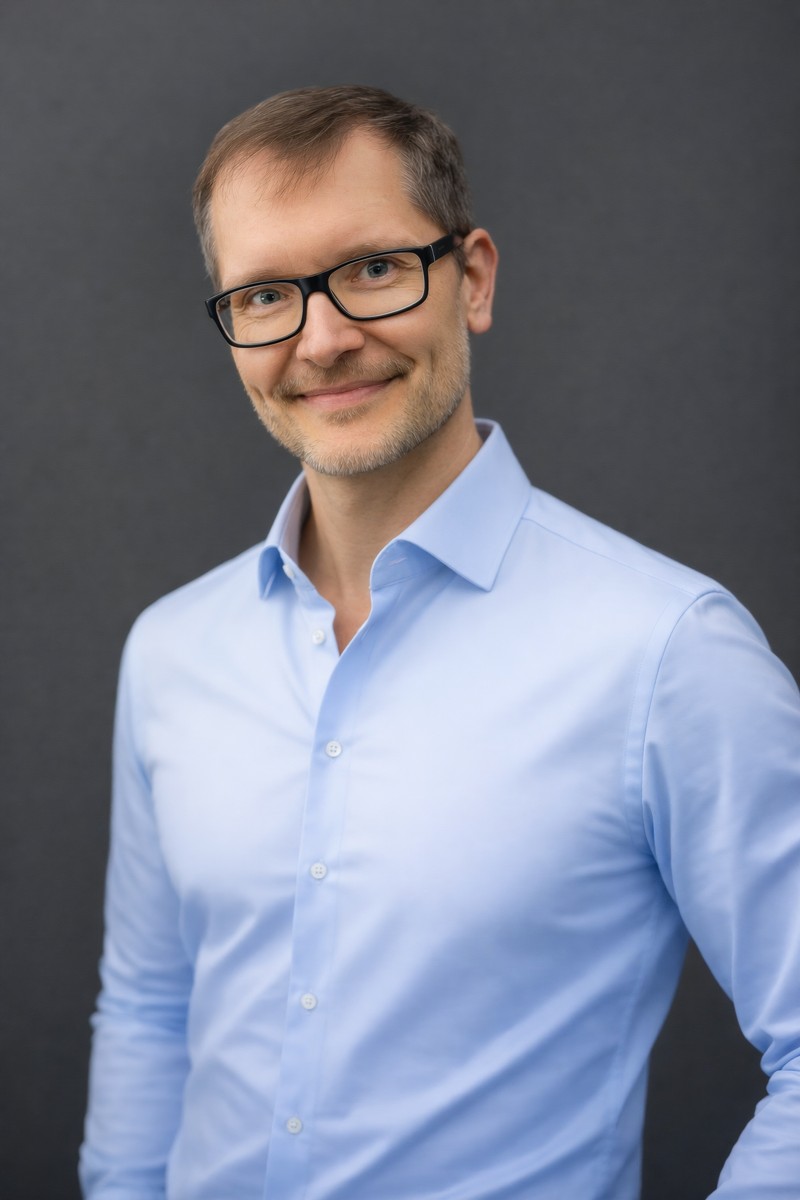
I turn complex requirements into sustainable, production-ready software systems. I take full end-to-end ownership — from the first architectural decisions and lines of code to stable, long-term operation in production, whether building critical core components from scratch or modernizing complex legacy systems.
Services
Technical Assessment & Target Architecture
In-depth full-stack analysis of existing systems and definition of a clear, actionable modernization roadmap to support informed technical and business decisions.
Request DetailsImplementation of Critical Core Components
Hands-on delivery of production-ready reference components, high-performance APIs, and scalable services across the entire stack.
Request DetailsMigration & Technical Modernisation
Controlled replacement of legacy systems through incremental modernization instead of full rewrites, with a strong focus on integration and transition architectures.
Request DetailsTechnical Sparring & Enablement
Stronger technical decisions and more capable teams through code reviews, hands-on mentoring, and the establishment of clear full-stack standards.
Request DetailsMy way of working: "You build it, you run it"
I work with full technical ownership. Architectural and technology decisions are made with long-term, 24/7 production operation in mind. Risks are not delegated — they are addressed early through focused prototypes and incremental, production-ready releases.
- End-to-end ownership: Architecture, backend, APIs, and production operations in one hand.
- Clarity before action: Structured evaluation of options, including risks and trade-offs.
- Sustainability: Systems designed to remain stable, maintainable, and free from costly rewrites.
Project Highlights
Selection of projects with focus on measurable economic success.
Building a Platform for Automated Regulatory Reporting
Platform Architecture
End-to-End Technical Ownership
Regulatory reporting requirements
The Initial Situation
Regulatory reporting for electricity, heating, and gas consumption was largely handled manually, resulting in significant operational overhead. The existing process focused solely on producing mandatory reports for authorities, while the collected data was not reusable for downstream business or analytical use cases. With a growing number of metering devices, this approach became economically unsustainable and posed a scalability risk.
The Objectives
- Fully automate regulatory reporting processes
- Enable on-demand generation of regulatory reports
- Build a scalable and extensible data platform beyond pure regulatory needs
My Approach
As Tech Lead with full end-to-end responsibility, I designed the overall platform architecture and led its implementation. I defined clear system boundaries for data ingestion, normalization, aggregation, and reporting, ensuring independent scalability, clean separation of concerns, and long-term extensibility.
The Result
Manual reporting processes were completely eliminated and replaced by automated, on-demand generation of regulatory reports. The platform now serves as a scalable data foundation, enabling additional business and analytical use cases beyond mandatory compliance reporting.
Technology Stack
Strategic Database Decision & Migration from ArangoDB to Neo4j
Architecture Decision-Making
Migration Risk Reduction
Database Strategy
The Initial Situation
As part of a platform migration, an existing ArangoDB-based solution had to be replaced due to rising costs and growing complexity. The strategic choice was between introducing a graph-native database (Neo4j) or adopting a more complex multi-database alternative. This decision had to be validated quickly to avoid delivery delays and long-term architectural risk.
The Objectives
- Design and implement a focused Neo4j proof of concept for key use cases
- Perform graph modeling and evaluate performance and maintainability risks
- Provide a solid, decision-ready foundation for management
My Approach
I evaluated architectural options under significant delivery pressure by designing and implementing a focused proof of concept covering the platform’s core use cases. In parallel, I supported the team in transitioning existing data access logic into a production-ready graph-based model.
The Result
The proof of concept enabled a fast and well-founded architectural decision. Migration risk was significantly reduced, allowing the platform transition to be completed within the committed timeline and without introducing unnecessary complexity.
Technology Stack
Legacy Modernization — Replacing Vignette StoryServer Without a Full Rewrite
Risk Reduction
Cost Optimization
Legacy Modernization
The Initial Situation
A legacy CMS caused high and continuously increasing operating and licensing costs and had to be replaced. The originally planned full rewrite exceeded time and budget constraints and introduced additional licensing risks, putting overall project delivery at risk.
The Objectives
- Replace the legacy CMS within strict time and budget constraints
- Ensure full functional equivalence in production under significant delivery pressure
My Approach
I challenged the rewrite-based approach and designed an alternative solution that preserved the existing business logic. By executing the legacy templates in a modern application runtime, the dependency on the original CMS runtime was fully removed.
The Result
A full rewrite was avoided, significantly reducing migration effort, risk, and cost. The legacy system was successfully replaced on time and within budget, without introducing new vendor or licensing dependencies.
Technology Stack
Competencies
Architecture & APIs
- Full-stack system architectures
- Microservices & platform architectures
- REST, GraphQL, OpenAPI
- API-first & domain-driven design
- Security & IAM (Keycloak)
Engineering & Core Technologies
- Java / Kotlin (Spring Boot)
- TypeScript
- React & Material UI
- SQL & NoSQL (Neo4j, InfluxDB)
Cloud & Operations
- Google Cloud (Pub/Sub, Storage)
- Docker, Kubernetes, Helm
- CI/CD pipelines (design & integration)
- Observability (Prometheus, Grafana)
Testing & Delivery
- Unit & integration testing
- BDD (Cucumber)
- End-to-end testing
- Agile product delivery (Scrum / Kanban)
Roles & Focus
Hands-on Tech Lead
Overall technical ownership for architecture and delivery. Hands-on implementation of critical components and accountability for quality, delivery reliability, and long-term technical sustainability.
Software Architect
Structuring complex and ambiguous requirements into robust, economically sound architecture concepts with a clear focus on long-term viability.
Technical Bridge
Interface between product and engineering. Clarifying goals, constraints, and risks to enable smooth and predictable delivery.
Enablement & Technical Sparring
Enabling technical decision-makers and teams. Providing guidance on strategic technology decisions, architecture reviews, and best practices.
Education & Certificates
Graduate in Business Information Systems
HTW Dresden
01 Oct 2001
-
30 Nov 2006
Focus: Business Informatics
Java-Certificate 1Z0-851 Java Standard Edition 6 Programmer [SCJP]
Oracle · 02 Dec 2011
What clients say
Andreas combines pragmatic problem-solving with a strong overview of complex initiatives. He consistently delivers results and operates at a very high professional level.Florian P. Client · Platform Project
Andreas played a key role in delivering complex features under significant time pressure. His technical expertise and willingness to share knowledge were critical to the team’s success.Philipp K. Product Owner · Energy Platform
Andreas analyzes complex problems quickly and delivers robust, sustainable solutions. His architectural thinking significantly improves overall system quality.Annika K. & Atul M. Engineering Team · Distributed Systems
Pricing & Availability
Projects are billed on a fixed-price basis (scope-based) or as time & materials (EUR 100–150/hour). Discounts may apply for long-term engagements.
Current status: Available (100% Remote, CET)
Frequently Asked Questions (FAQ)
-
Do you work on-site?
Currently, I work 100% remotely (CET time zone). -
Are you insured?
Professional liability insurance is available upon request. -
Which industries do you focus on?
Energy utilities, platform operators, and innovative energy and climate technology companies.
Discuss a Project
Let’s talk about how I can support your team and project.